Dream Crazy: Nike’s Bold Branding and Marketing Campaign
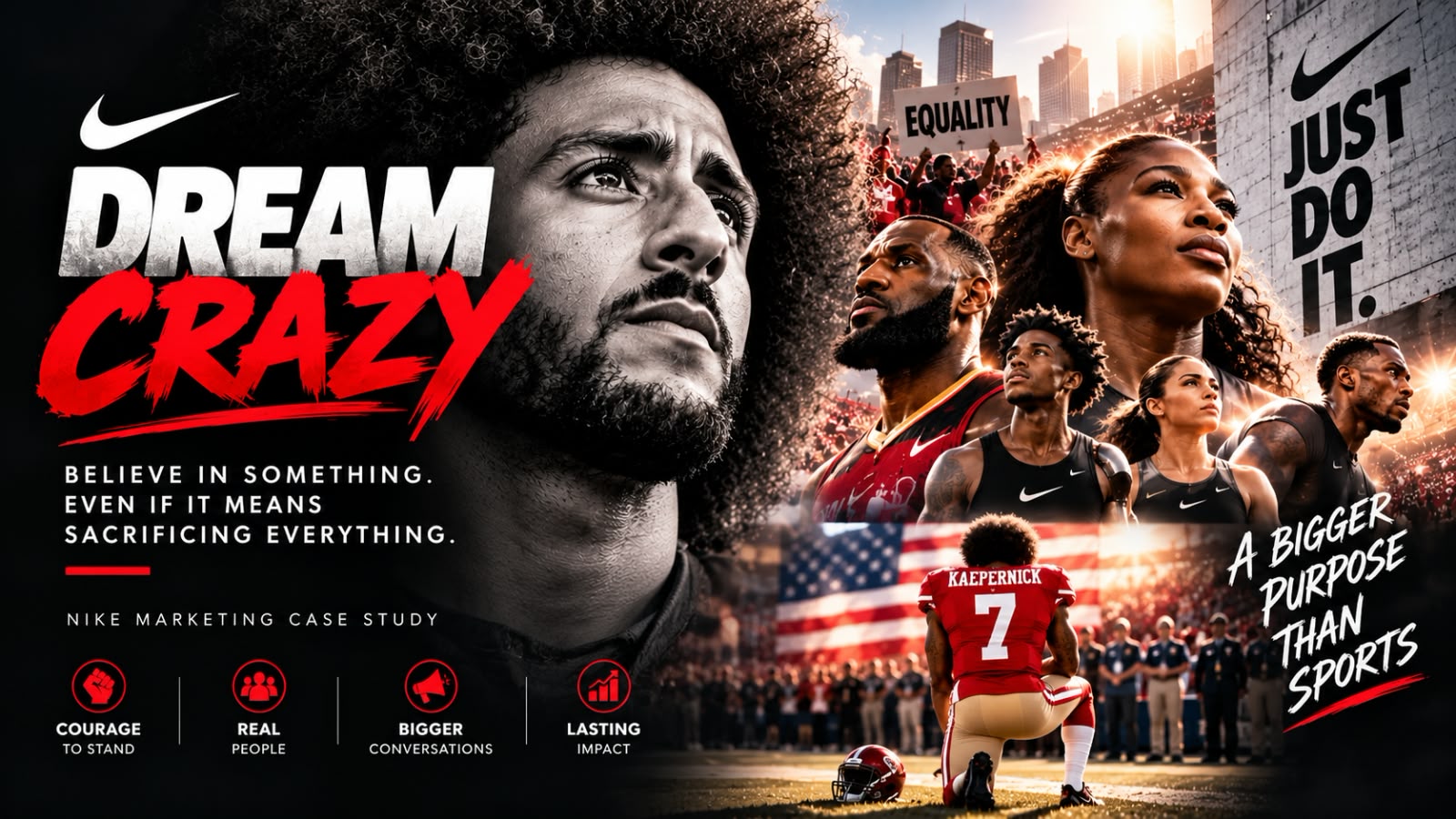
Overview
Dream Crazy: How Nike Turned a Bold Message into a Global Marketing Conversation
Discover how Nike used courage, emotional storytelling, athlete influence, and bold brand positioning to create one of the most talked-about marketing campaigns of 2018. Explore the strategy behind Dream Crazy, its public response, and practical marketing lessons that businesses can apply across different markets.
- Brand Strategy
- Emotional Branding
- Social Media Marketing
- Consumer Psychology
Key Topics: Bold Brand Positioning, Earned Media, Influencer Marketing, Social Messaging, and Business Impact.
Read Full Case StudyOne Dream, One Bold Stand, and How an Advertisement Sparked Conversations Around the World
A roaring stadium, an excited crowd in the stands, and world-famous athletes sweating it out on the field. In such a scene, the camera focuses on a powerful reminder: success is not just about winning. Success is about turning your dreams into reality.
In 2018, Nike’s “Dream Crazy” campaign gave this message a new voice. While celebrating the 30th anniversary of its “Just Do It” slogan, Nike took a step that sparked social and political discussions around the world.
This campaign was not just an advertisement about sports. It was a message about courage, belief, social values, and standing up for one's dreams.
In this case study, we will explore how Nike used a bold message, stories of well-known athletes, and emotional branding to bring an advertisement to the center of global discussion.
Background and Context
Nike has long used its “Just Do It” slogan to promote confidence, inner strength, and the idea of pushing beyond personal limits.
In 2018, as the slogan celebrated its 30th anniversary, Nike wanted to launch a major campaign that would honor its legacy while also addressing the social context of the time.
During that period, Colin Kaepernick, an American football quarterback, was at the center of public discussion. He had protested against racial injustice by kneeling during the American national anthem. His action sparked intense debate.
On one side, Kaepernick's supporters viewed his decision as a courageous stand for social justice. On the other side, his critics considered it disrespectful to the national flag and patriotism.
Nike chose this controversial figure as the face of its campaign.
The central message of the advertisement was:
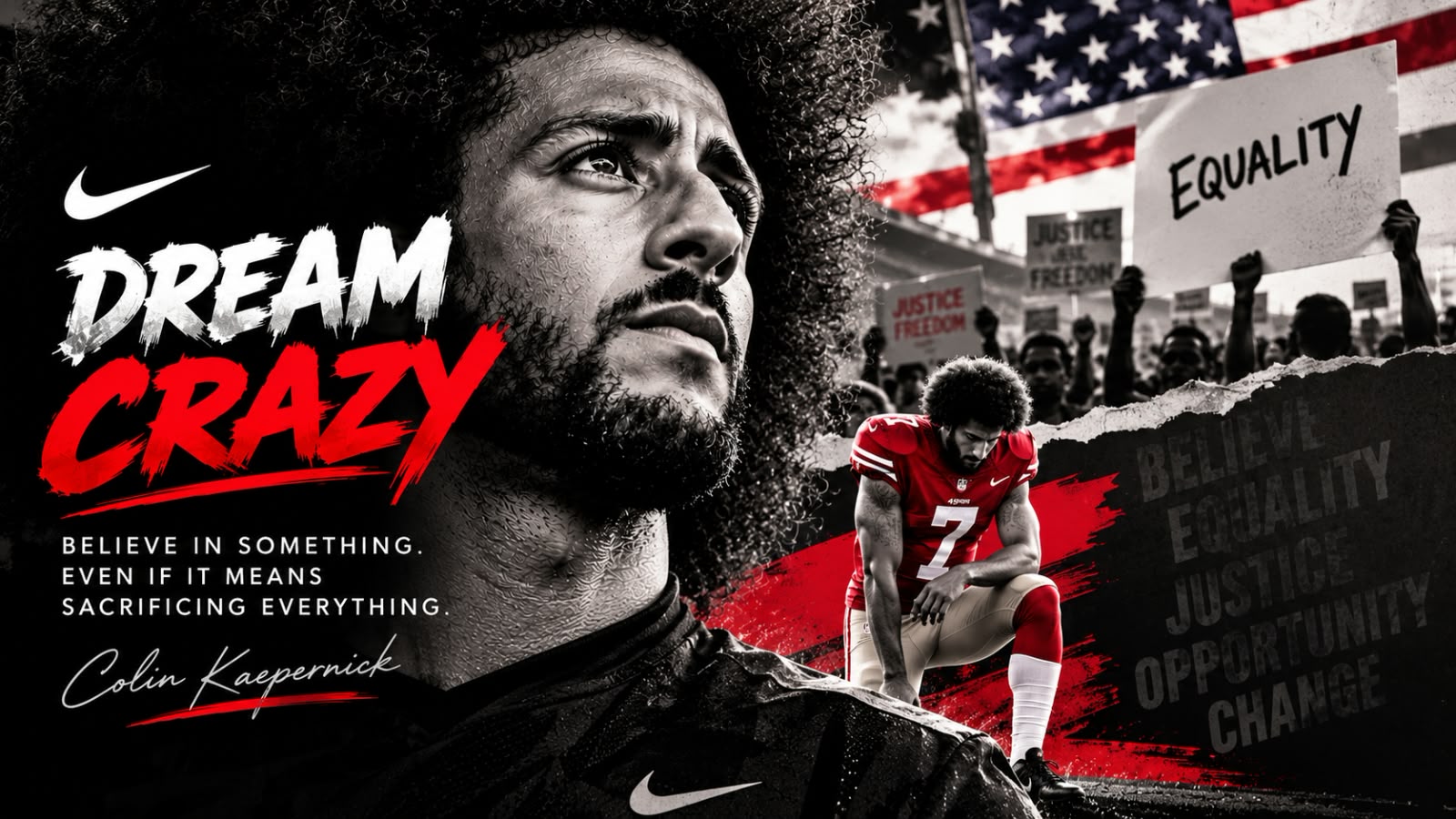
“Believe in something. Even if it means sacrificing everything.”
In other words, when you truly believe in something, you should not step back from that belief, even if standing by it requires significant sacrifice.
Through this message, Nike did not speak only about success in sports. It also highlighted the importance of standing up for personal beliefs, values, and dreams.
The Core Concept of the Campaign
1. Courage and Ambition
Nike has always emphasized courage and confidence. Through the Dream Crazy campaign, it showed that success is not limited to performance on the field.
Overcoming personal limitations, facing adversity, and standing up for one's values in different areas of life are also forms of courage.
The campaign encouraged people to dream big and think beyond conventional limitations to turn those dreams into reality.
Marketing Lesson: A brand's message can become more meaningful when it connects with customers' personal goals, aspirations, and life challenges.
2. Social Messaging
Dream Crazy was not limited to sports. It brought issues such as racial equality, social justice, and personal courage into the spotlight.
Colin Kaepernick's presence increased the campaign's social and political significance. Through his personal stance, Nike created a discussion that extended beyond the world of sports.
However, incorporating social and political issues into brand marketing is not always easy. It can attract support, but it can also lead to criticism and opposition.
Marketing Lesson: Before creating a campaign built around a social message, it is important to understand the brand's values, target audience, and potential reactions.
3. Emotional Connection
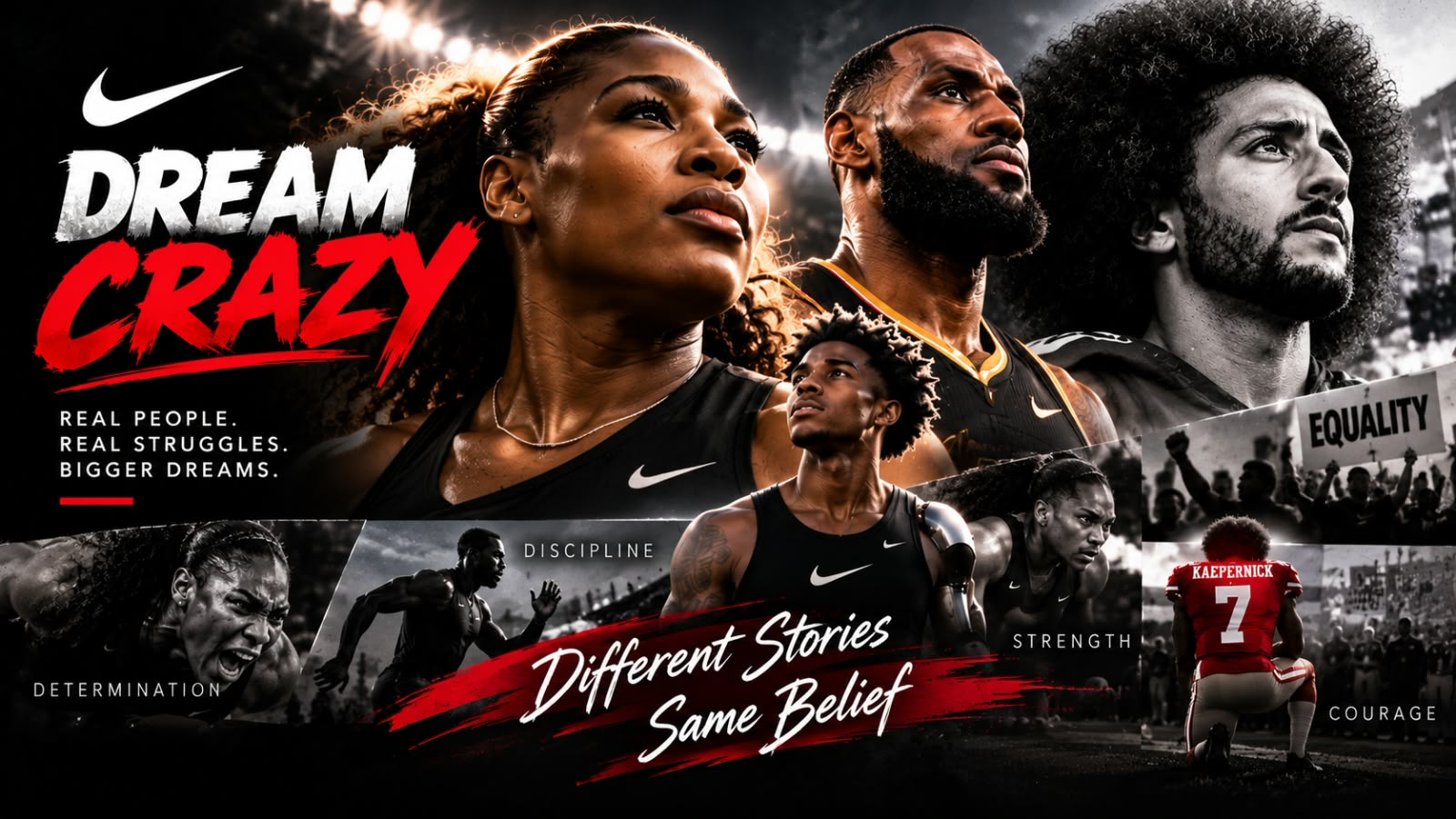
The campaign video featured Colin Kaepernick's voice-over alongside stories of athletes such as LeBron James, Serena Williams, and Shaquem Griffin.
Their struggles, achievements, and experiences of overcoming adversity provided examples that could inspire many viewers.
Nike did not focus only on product features or performance. Instead, it highlighted people's dreams, struggles, and belief in their own abilities.
Marketing Lesson: Building an emotional connection with customers requires more than highlighting product benefits. It also involves sharing stories that allow people to relate to their own experiences and aspirations.
Execution and Marketing Strategy
1. Social Media and PR Strategy
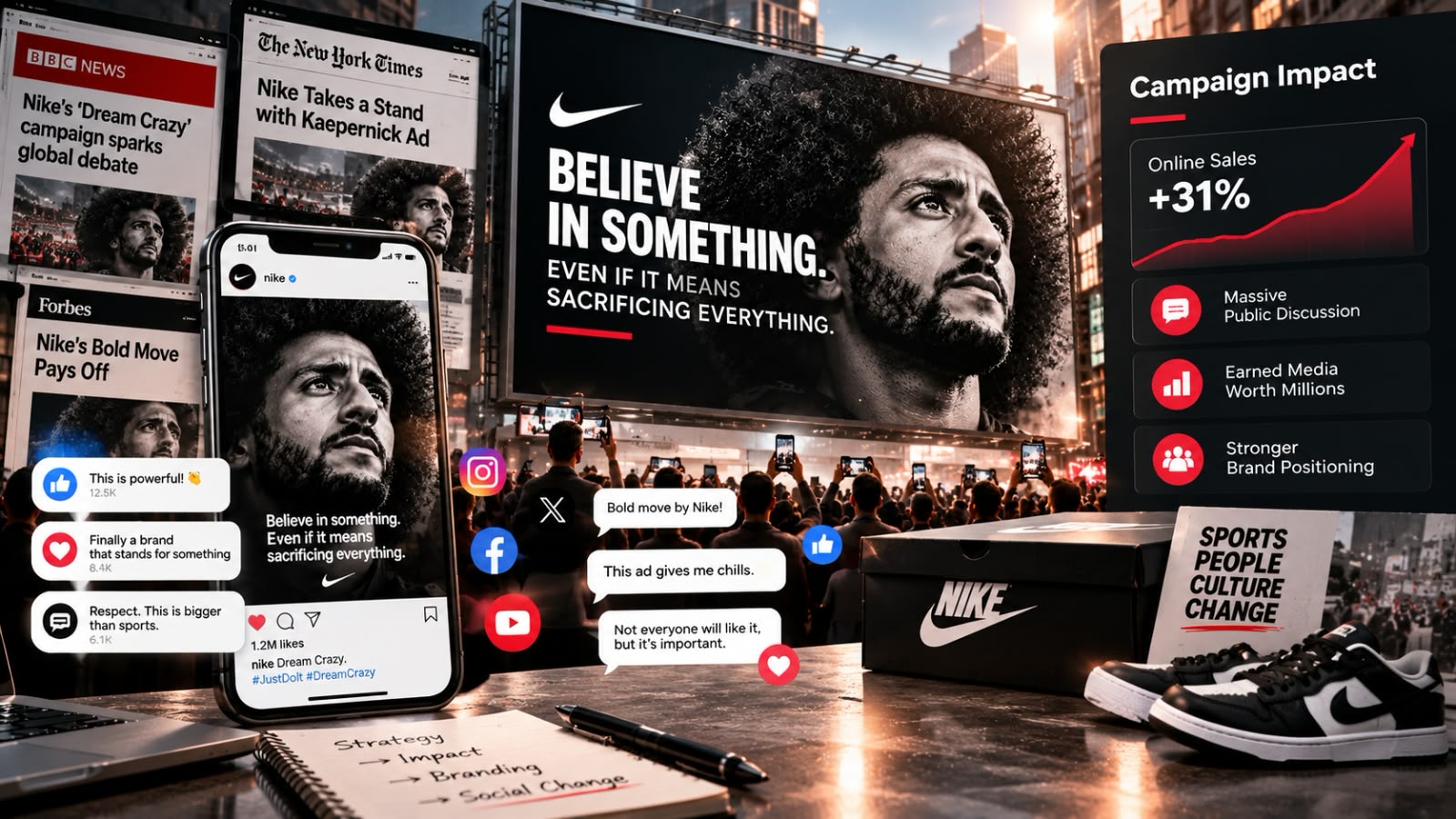
Soon after the campaign's main poster and advertisement were released, they sparked widespread discussion.
Many people supported Nike's position on social justice. Others responded critically, with some protesting by boycotting or destroying Nike products.
Both types of reactions brought the campaign into the spotlight across news outlets and social media.
An important point to note is that Nike's promotion did not spread only through its own advertisements. News reports, public reactions, online discussions, and different opinions helped increase the campaign's visibility.
This is an important example of Earned Media, where a brand receives exposure through news coverage and public discussion beyond its own advertising.
Marketing Lesson: A powerful message can generate public discussion. However, creating controversy should not be the primary goal. It is also important to consider whether the discussion aligns with the brand's identity, values, and long-term business objectives.
2. Influencer and Celebrity Involvement
Well-known athletes such as Serena Williams and LeBron James were featured in the advertisement. Their achievements, struggles, and personal stories strengthened the campaign's central message.
The video combined short statements with personal experiences and dreams. As a result, the advertisement became more than a brand promotion. It took the form of an inspirational story.
However, the athletes' fame was not the only important factor. The alignment between their stories and the campaign's central message also mattered.
Marketing Lesson: When selecting influencers or celebrities, popularity alone is not enough. Their personal stories, credibility, and alignment with the brand's message should also be evaluated.
3. Brand Positioning
Nike did not present itself merely as a clothing and footwear brand. Through the campaign, it sought to connect its identity with sports, confidence, personal courage, and social values.
Taking a clear political or social position can be risky for a brand. The same message may feel inspiring to one group of people while appearing objectionable to another.
Nike chose a clear message despite those risks.
This made the brand's position more visible and encouraged people to discuss Nike's values.
Marketing Lesson: Strong brand positioning requires clarity about what a brand believes in and what it stands for. However, that position should remain consistent with the brand's actual activities and long-term identity.
Campaign Success and Impact
According to the information mentioned in the original case study, reports published at the time stated that Nike's online sales increased by approximately 31% within days of the Dream Crazy campaign's release. The source cited for this information was an Edison Trends report from 2018.
However, this sales increase should not automatically be attributed to the campaign alone. Other marketing activities, product demand, timing, and market conditions can also influence sales.
Several important impacts of the campaign can be identified.
1. Online Sales Growth: Reports at the time highlighted a significant increase in online sales following the campaign. This suggests that a strong brand message can be associated with business results, although its independent impact requires further evidence.
2. Becoming the Center of Brand Discussions: Reactions from both supporters and critics generated widespread public discussion about Nike. This exposure across news outlets and social media increased the brand's visibility.
3. Expanding the Reach of a Social Message: The campaign extended beyond sports and raised discussions about the role a brand can play in social and political issues.
4. Clearer Brand Positioning: Nike's message of courage, confidence, and standing up for one's beliefs became more visible through the campaign.
These outcomes highlight an important point. The campaign's impact was not limited to how many people saw the advertisement. The relationship between the brand's message, public reactions, and business results also became an important part of the discussion.
How Can This Strategy Be Applied in Markets Around the World?
A business does not need a large budget or a globally recognized brand like Nike to learn from the Dream Crazy campaign.
Small businesses, local brands, online stores, and international companies can apply some of the campaign's core principles according to their own markets and customer contexts.
However, rather than directly imitating Nike's social and political stance, it is important to consider the brand's own values, customer expectations, and actual business objectives.
1. Highlight Real-Life Inspirational Stories
Every country and industry has people who have overcome adversity to achieve their goals.
The struggles and achievements of an athlete, entrepreneur, artist, student, or an ordinary individual can provide the foundation for meaningful brand content.
However, a story should not be used merely to generate emotion. It should be presented with respect for the individual's experience, consent, and actual achievements.
Practical Application: Highlight stories of people connected to your brand who have overcome challenges or achieved meaningful progress in their respective fields.
2. Understand the Local Social and Cultural Context
Social messages are not received in the same way in every country. Language, culture, social values, and the political environment can change the meaning of a message and the reactions it generates.
Before incorporating a social issue into a campaign, it is important to research local perspectives and potential reactions.
Issues such as education, inclusion, equal opportunities, environmental responsibility, or community development may align with the values of certain brands.
However, the chosen issue should be connected to the brand's actual work and long-term commitments.
Practical Application: Choose an issue that aligns with your brand identity and matters to your customers. Then use research and real initiatives to make the message credible.
3. Build a Community Through Social Media
Dream Crazy demonstrated how a strong message can encourage people to express their opinions and participate in discussions.
Your brand can also give customers opportunities to share their experiences, struggles, and achievements.
For example, a campaign could invite people to share stories about achieving their goals. With their permission, the brand could publish selected stories.
Relevant hashtags, short videos, and user-generated content can make this participation easier.
Practical Application: Create a clear message and a simple participation process. Then evaluate not only views and likes but also meaningful engagement and changes in the relationship between customers and the brand.
4. Involve Influencers and Recognized Local Figures
Every market has people whose stories, skills, or work are trusted by particular communities.
They may be athletes, content creators, entrepreneurs, artists, or professionals with expertise in their fields.
However, selecting someone based only on follower count is not enough. Their credibility, relationship with their audience, and alignment with the brand's message are also important.
Practical Application: Work with people who can communicate the campaign's message through their own experiences. Prioritize authentic stories and credible presentations over artificial promotion.
5. Evaluate the Risks of Bold Brand Positioning
A clear position can help a brand stand out. However, taking every type of social or political position is not suitable for every brand.
Before addressing an issue, consider the following questions:
- Does the issue align with the brand's core values?
- How might the target audience interpret the message?
- Is the brand prepared to handle potential support and criticism?
- Do the brand's actual activities support its public message?
- How will the campaign's success be measured?
This type of evaluation can help a brand avoid making risky decisions simply to attract attention.
Practical Application: Before using a bold message, evaluate its purpose, potential impact, and the brand's ability to execute it. Focus on building a credible and long-term brand identity rather than creating controversy alone.
My Key Takeaways
The most important lesson I take from the Dream Crazy case study is that a brand's strength is not limited to its products or advertisements. What a brand believes in, the stories it tells, and the experiences it connects with all play a role in shaping its identity.
Nike chose a bold message at a time when Colin Kaepernick's position was generating intense debate in the United States. The campaign used that controversial context to highlight dreams, confidence, personal courage, and social values.
This example reminds me that emotional marketing is not simply about inspiring people. An effective campaign needs consistency between its message, brand identity, and actual activities.
As a marketer, I believe three factors should be considered before making bold marketing decisions: brand values, target audience psychology, and potential business impact.
A controversial campaign can generate widespread discussion, but creating discussion alone is not the only measure of success. Customer trust, long-term brand identity, and measurable business results should also be considered.
Ultimately, successful branding does more than encourage people to buy a product. It helps people understand what a brand represents and why that identity may matter to them.
References
1. Edison Trends (2018). “Nike Sales Report.”
2. NIKE, Inc. (2018). Publications related to the Colin Kaepernick advertisement and the Dream Crazy campaign.
3. Adweek (2018). Reports and analysis related to Nike's Dream Crazy campaign.
4. BBC News (2018). Reports related to the controversy surrounding Colin Kaepernick and Nike's advertisement, as well as sales growth.
Nike demonstrated that when a risky decision is supported by careful planning and a powerful message, a brand can achieve business success while also taking a leading role in public discussion. In the modern era, people do not simply buy products. They also connect with a brand's values, ideals, and stories. Dream Crazy touched precisely that point and became a notable example of marketing.
About the Author
Ali Ahammad Emon | AI-Driven Digital Marketing Expert
Ali Ahammad Emon is a Digital Marketer and Business Growth Consultant who works in AI-Driven Digital Marketing, Meta Ads, Google Ads, Marketing Strategy, Conversion Tracking, and Data-Driven Growth.
His case studies analyze real-world marketing campaigns, consumer psychology, brand strategy, and business growth approaches. Through these analyses, he shares practical marketing lessons and actionable insights for marketers and business owners.
Website: https://aliahammademon.com